Why Daily Fantasy Sports Is a Healthier Form of Online Gaming Compared to Sportsbooks and Traditional Gambling
A psychology-driven deep analysis on skill, behavior, and consumer decision-making
Online gambling has expanded rapidly in recent years — ranging from sportsbooks to casino-style games like slots, roulette, crash games, and virtual betting. But among these digital entertainment formats, Daily Fantasy Sports (DFS) stands out as a fundamentally healthier, more skill-based, and psychologically safer activity.
This article explains why DFS is different from traditional online gambling, using perspectives from:
- Cognitive psychology
- Behavioral economics
- Decision science
- Consumer psychology
- Risk-reward behavior studies
And why, from a mental health and behavioral standpoint, DFS is one of the most responsible ways to engage in competitive prediction games.
1. DFS Activates Skill-Based Thinking Instead of Pure Chance Behavior

In psychology, gambling activities are often classified into two categories:
- Chance-dominant (slots, roulette, crash games, virtual casino events)
- Skill-dominant (poker, DFS, strategy card games)
Daily Fantasy Sports clearly belongs to the skill-dominant category.
Why this matters (from a cognitive psychology view):
- Skill-based games activate System 2 thinking
(deliberate, analytical, rational decision-making) - Chance-based games trigger System 1 thinking
(impulsive, emotional, instinctive behavior)
DFS requires:
- Researching player stats
- Interpreting usage, pace, trends
- Understanding matchups
- Optimizing salary caps (in some formats)
- Building lineups strategically
- Thinking probabilistically
This rewires the user’s mindset from “I hope I get lucky” to
“I want to make the best strategic decision.”
This shift reduces impulsive risk behavior and encourages planning, patience, and critical thinking.
2. DFS Reduces Addictive Behavior by Limiting Rapid Reward Cycles
One of the biggest psychological risk factors in online gambling is the high-speed reward loop, also known as “rapid variable reinforcement,” a core driver of addiction.
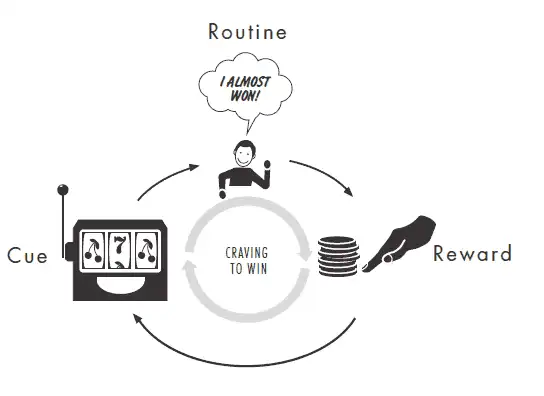
Examples:
- Slot machines (results every 3–6 seconds)
- Roulette or crash games (results every 10–20 seconds)
- Instant-win games
In contrast, DFS has:
- Slow cycles (hours-long or even full-day contests)
- No instant repeated betting
- No continuous rapid wagering loops
- No “spin again” or “double down” mechanics
This dramatically reduces:
- Impulsive retry behavior
- Mindless loss chasing
- Dopamine-driven reward loops
DFS encourages single-decision gameplay, not rapid-fire repetitive gambling.
In behavioral psychology, this makes DFS far less addictive than most gambling formats.
3. DFS Encourages Research, Learning, and Long-Term Strategy

Consumer psychology shows that behaviors linked to learning and self-improvement create healthier engagement patterns.
DFS players typically engage in:
- Studying player statistics
- Tracking performance trends
- Learning game theory
- Following injuries, rotations, and pace analytics
- Developing personal predictive models
This builds:
- Competence (sense of mastery)
- Autonomy (players choose strategy)
- Intrinsic motivation (interest-driven participation)
These are three pillars of the Self-Determination Theory, a leading psychological model for healthy motivation.
By contrast, traditional gambling does NOT promote:
- learning
- mastery
- personal strategy
Instead, casinos design games to prevent skill from overriding the house edge.
DFS, however, rewards skill, which fosters healthier long-term engagement.
4. DFS Is Peer-to-Peer (P2P), Reducing the “Predatory House Edge”
.png)
In sportsbooks and casinos:
- You play against the house
- The house profits when you lose
- The house has a built-in mathematical advantage
- The house may design the experience to maximize player losses
This creates a predatory incentive structure.
In DFS:
- Players compete against other players, not the operator
- The platform earns a fixed entry fee commission (rake)
- The operator’s revenue does not depend on player losses
- There is no incentive to manipulate outcomes
- No “house bias” exists
This creates a more transparent, neutral environment, which behavioral economists classify as a non-exploitative competitive market, compared to the exploitative mathematical model of traditional gambling.
5. DFS Rewards Predictive Skills Instead of Emotional Betting
Sportsbook bettors often fall into psychological traps like:
- Loss aversion
- Recency bias
- Sunk-cost fallacy
- Gambler’s fallacy
- Overconfidence bias
- Team loyalty bias
- Emotional chasing

These lead to unhealthy betting patterns.
DFS reduces these psychological pitfalls because:
- Players focus on player-level projections, not team loyalty
- Wagering decisions are strategic, not emotional
- Results depend on lineup construction, not a single binary outcome
- Risk is distributed across eight or more players, lowering emotional volatility
From a behavioral psychology standpoint, DFS encourages rational diversification, similar to portfolio building — whereas sportsbooks encourage binary emotional bets.
6. DFS Has Predictable Loss Boundaries (Unlike Unlimited Gambling Games)

Casinos often allow:
- rapid repeat betting
- all-in wagers
- unlimited spin amounts
- no meaningful cap on risk
Meanwhile, DFS contests:
- Require fixed entry fees
- Have clearly defined profit ceilings
- Allow only one lineup per entry
- Prevent “double or nothing” emotional chases
- Have no in-game impulse betting loops
This aligns with financial psychology concepts like risk compartmentalization, which reduces harm and helps players regulate spending more effectively.
7. DFS Promotes Community, Competition, and Social Engagement
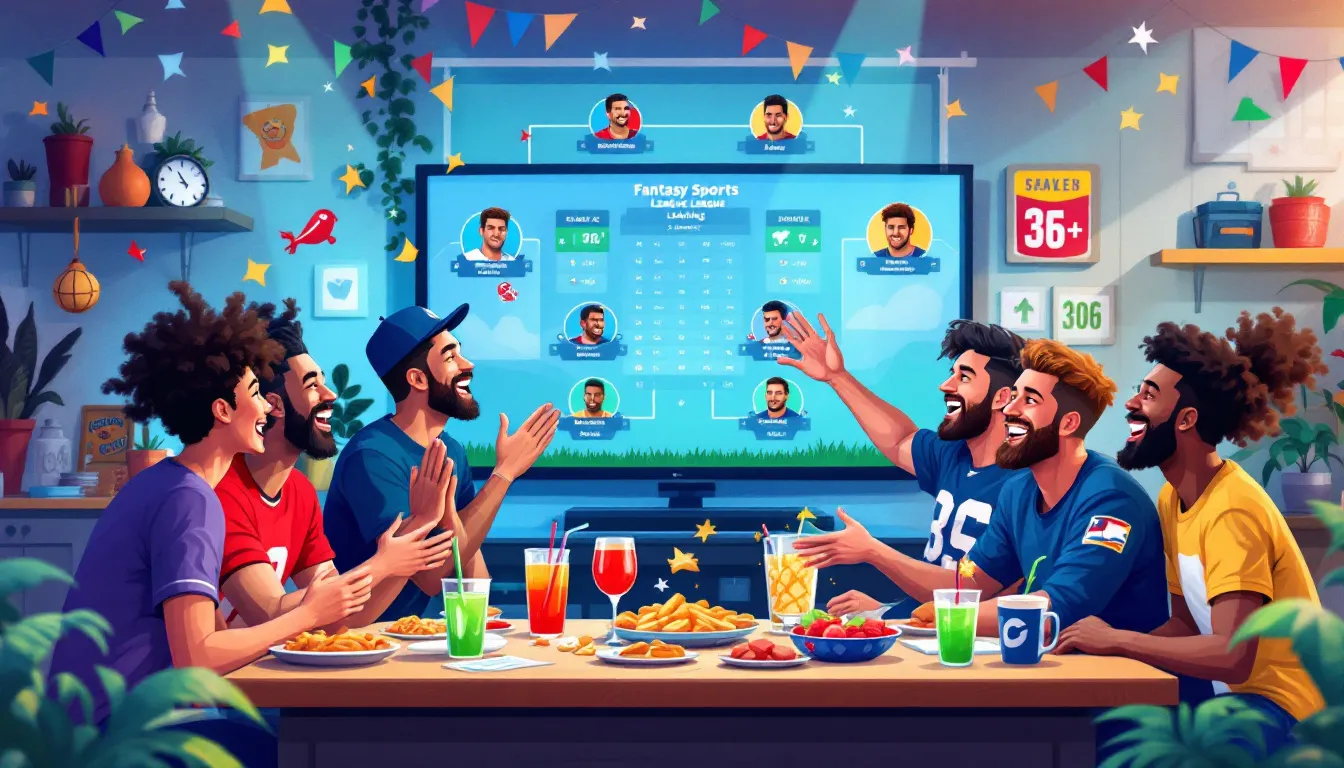
DFS culture fosters:
- Leaderboards
- Public contests
- Shared research discussions
- Community analysis
- Friendly competition
Social motivation is psychologically healthier than solitary, isolated gambling behavior.
Healthy competition engages:
- Social bonding
- Cooperative learning
- “Mastery mindset” instead of “chasing mindset”
This is why DFS is often compared to:
- Chess tournaments
- Poker strategy
- Skill-based esports
Rather than slot machines or roulette.
8. DFS Outcomes Cannot Be Manipulated — Even in Virtual Matches

Even if DFS contests use virtual match data, the fairness stays intact because:
- Players are competing against each other, not the operator
- The operator has no financial motivation to alter results
- DFS scoring is based on individual statistical outputs, not match results
- Lineup possibilities reach trillions to quintillions
- No operator can “target” a specific winner even if they wanted to
This mathematical decentralization is a strong safeguard against manipulation — unlike sportsbook virtual matches where the house controls the simulation.
Conclusion: DFS Is One of the Healthiest Forms of Online Competitive Gaming
From the lens of psychology, behavioral science, and consumer behavior:
DFS is healthier because:
- It is skill-based, not luck-based
- It uses slow game cycles, preventing addictive loops
- It encourages research, mastery, and strategic thinking
- It is P2P, not house-vs-player
- It avoids emotional chasing behaviors
- It limits risk through fixed entry fees
- It fosters community and long-term engagement
- It remains fair even with virtual match data
DFS transforms competition from a gambling impulse into a strategic, skill-driven activity.
It offers entertainment, challenge, and mastery — without the predatory mechanics of traditional online gambling.